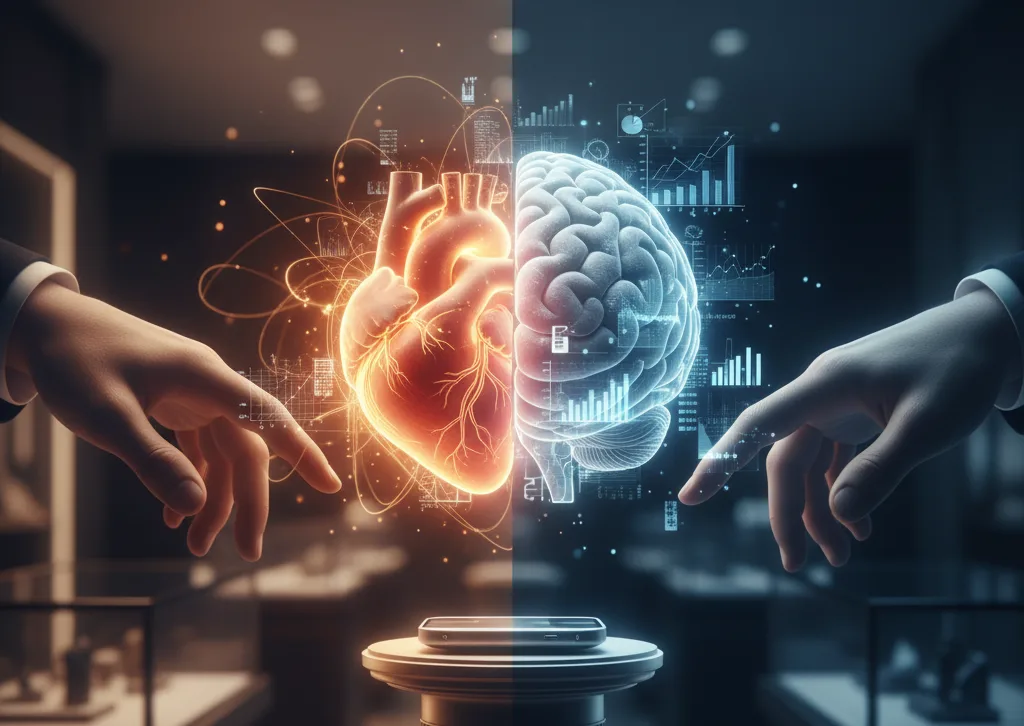
People Purchase Based on Emotion, Not Information: The Unwarranted Optimism of Buying Behaviour
Brands in a data driven, hyper-connected world are on a path to spend billions of dollars to understand consumer buying behaviour. They track clicks and conversions, collect demographics information and whatever else they can to contextualize the one question: “why do people buy?”
Yet, when you peel back the data points, graphs, algorithm and everything else they measure, there is a reality that is not widely acknowledged: Humans don’t buy products/ services because of logic, people buy based on emotion.
While this is a simple notion, this is the most insightful truth underlying good marketing. Once you fully comprehend this truth, the way you pitch, the way you interact with them and the way you communicate will change.
Understanding Contemporary Buying Behaviour
Buying behaviour refers to the decision-making process consumers engage in prior, during, and post-buying a product or service. This consumer behaviour or decision-making is influenced by not only rational thought but also psychological, social, cultural and emotional influences.
From a conventional marketing perspective, buyers have always been perceived as rational beings: they compare prices, assess product characteristics, and rationally decide. However, the reality-basis of behavioural science suggests something different.
Research conducted by Gerald Zaltman, a Harvard professor, suggested that 95% of purchasing decisions take place subconsciously. That is, consumers first make an assumption based on emotion, and only then do they use a rational thought process to support their decision.
This is why a person claims to be price conscious but chooses to pay more for a premium coffee brand; or, a person chooses to buy a running shoe, not just to run but to feel like an athlete.
Emotions are not antithetical to logical reasoning, they are pre-requisites to all buying behaviour.
Every great brand understands that feeling = connection.
Emotions are More Important Than Information
Emotions Lead to Decisions
Neuroscientist Antonio Damasio has shown that people with traumatic damage to the emotional centers of their brain do not make decisions, even when they are aware of the facts. This point would emphasize again that emotion is never simply the distraction, it is actually the mechanism that makes decision.
Data equals confidence; emotion builds.
What facts/features you have matter, but it’s secondary. Once the emotion creates the want, logic is the rationale. For example, a person may fall in love with the visual appeal and design of a smartphone ((emotion) and then rely back on logic by going online and Google searching everything about the specs on the phone’s camera.
Emotional Triggers Create Loyalty
Brand That.
Hi, this is a comment.
To get started with moderating, editing, and deleting comments, please visit the Comments screen in the dashboard.
Commenter avatars come from Gravatar.